Lexir
A B2B platform that helps craft wine and spirits brands launch and grow in Europe without a traditional distributor. I owned the product and how we explained it, turning a new distribution model into something brands could trust and use.
- Owned the brand dashboard and e-commerce platform end to end
- Helped grow from 1 to 8 European markets and a handful of brands to 70+
- Moved shop and checkout off custom builds so we could ship in weeks, not months
- Cut implementation costs ~60% by moving the right pieces to no-code / low-code
Traditional distributors don’t fit small craft brands
Before Lexir, if a craft brand wanted to enter the European market, they basically had one choice: a traditional distributor. They buy your stock cheap, control where it lands and how it’s priced, and usually only deal in bulk. This meant craft brands ended up with slim margins, little attention, and no real way to test a market at a small scale. Lexir created a whole new way to do business, where brands could keep ownership of their stock, pricing, and margin. It was the first tool that gave brands the infrastructure to basically DIY in a new market (with some help of course).
| Traditional | Lexir | |
|---|---|---|
| Control & margins | Buys stock cheap, sets the terms, keeps most of the margin | Brand keeps stock, sets prices, holds onto much higher margins |
| Cost & speed | Long middleman chain; onboarding can take months | One platform for import, warehouse, shop, and delivery — built to move faster |
| Focus & data | Easy to get lost in a big portfolio; brands get little performance data | Brand owns its presence — dashboard shows what’s working, backed by local sales partners on the ground |
| Starting & scaling | Often wants bulk; new distributor for every market | Start small (e.g. ~100 bottles), then add markets on the same rails |
Brand dashboard, shops, and a sales partner portal
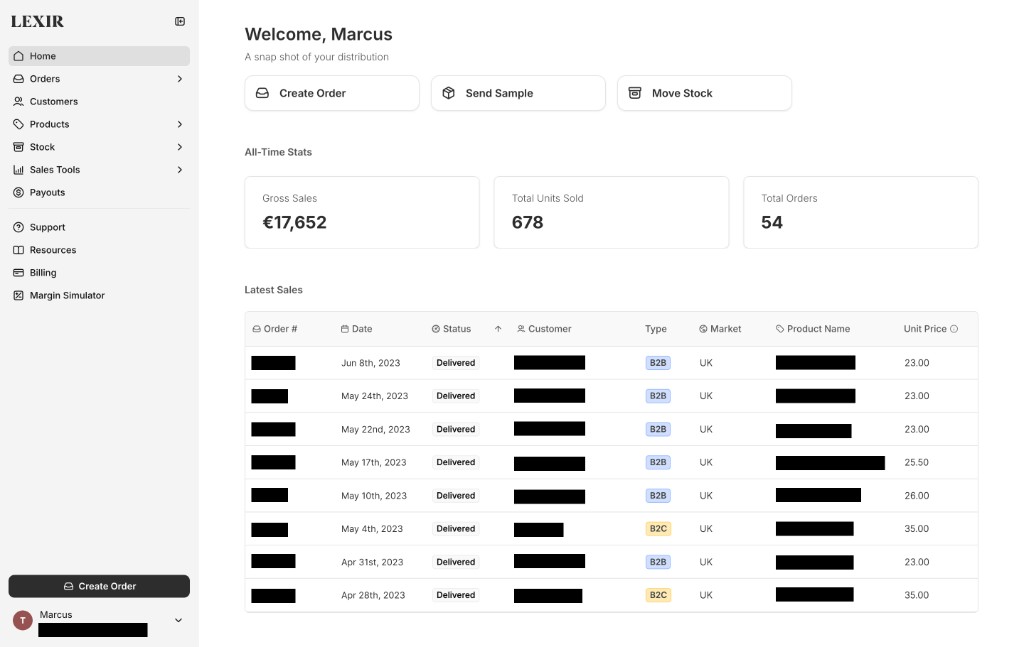
Lexir was a distribution platform with different doors for brands, buyers, and sales partners. The brand dashboard was the centre of it, where a brand managed its whole European presence in one place: products, stock by market, orders and customers, payouts, sales tools, and market resources. One standout feature was that brands could set different prices for different customers, which was not possible under traditional distributors.
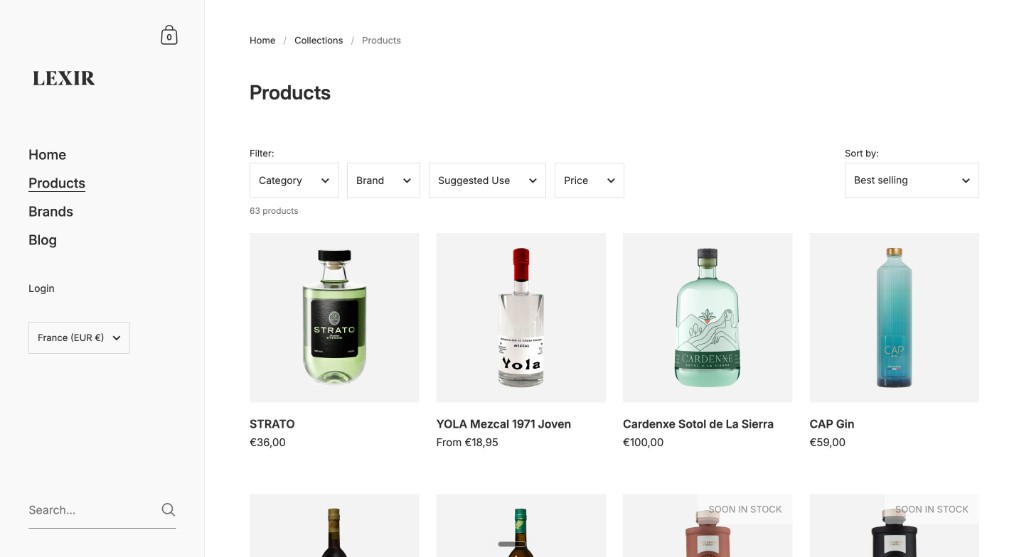
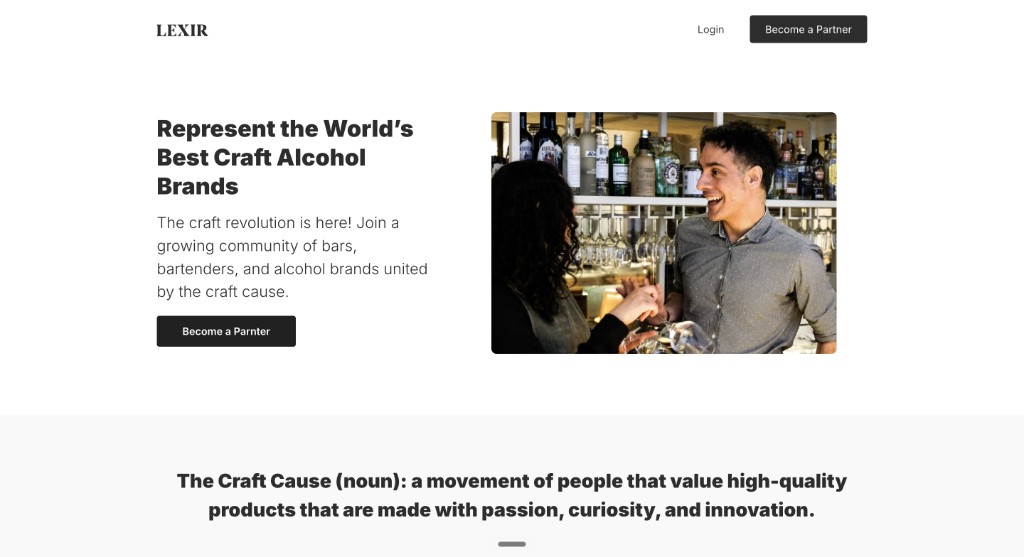
On the other end were the Lexir shops. Brands could sell through Lexir's own storefronts (B2B and B2C for each market), or connect our distribution backend to their own shop via integrations. A separate portal connected local salespeople with brands, letting them find each other and form working relationships.
Shipping faster with no-code tools
One of the highest-impact changes I drove at Lexir was transitioning us from building everything custom to utilizing no-code/low-code tools instead. It significantly impacted the course of the company, especially as a small one where being able to move fast and test is so important.
Before I joined, they were building basically everything custom. When I came on, I helped with those builds too, but it became clear we were solving problems that already had mature solutions (cart/checkout in our shop being the clearest example). The same pattern showed up across other aspects of the business too including the brand dashboard being over-built for the stage we were at.
Switching wasn’t an easy sell as we’d already started down the custom path, and moving away from it meant facing the sunk cost of that work. I showed we could get to the same place in weeks instead of months, and free up the engineering team for the work that mattered more for Lexir.
That efficiency was a real part of how we scaled: over three years we grew from a handful of brands to 70+ and expanded from a single market to eight across Europe.
Selling the new distribution model
Product marketing as part of the job
One thing that became clear to me working on Lexir was that having a good product isn’t enough to grow. A big part of the job is also to make sure people understand it, which is especially true in an industry where most people are used to doing things the old way.
Early on, prospects often assumed we were just another distributor, so a real part of the work was making sure we were positioned and framed the right way before anyone got on a call with us. A lot of what I did at Lexir was product marketing as much as it was product management for exactly that reason, working across video, email, social, ads, events, etc. to close that gap early.
Example content I produced for Lexir
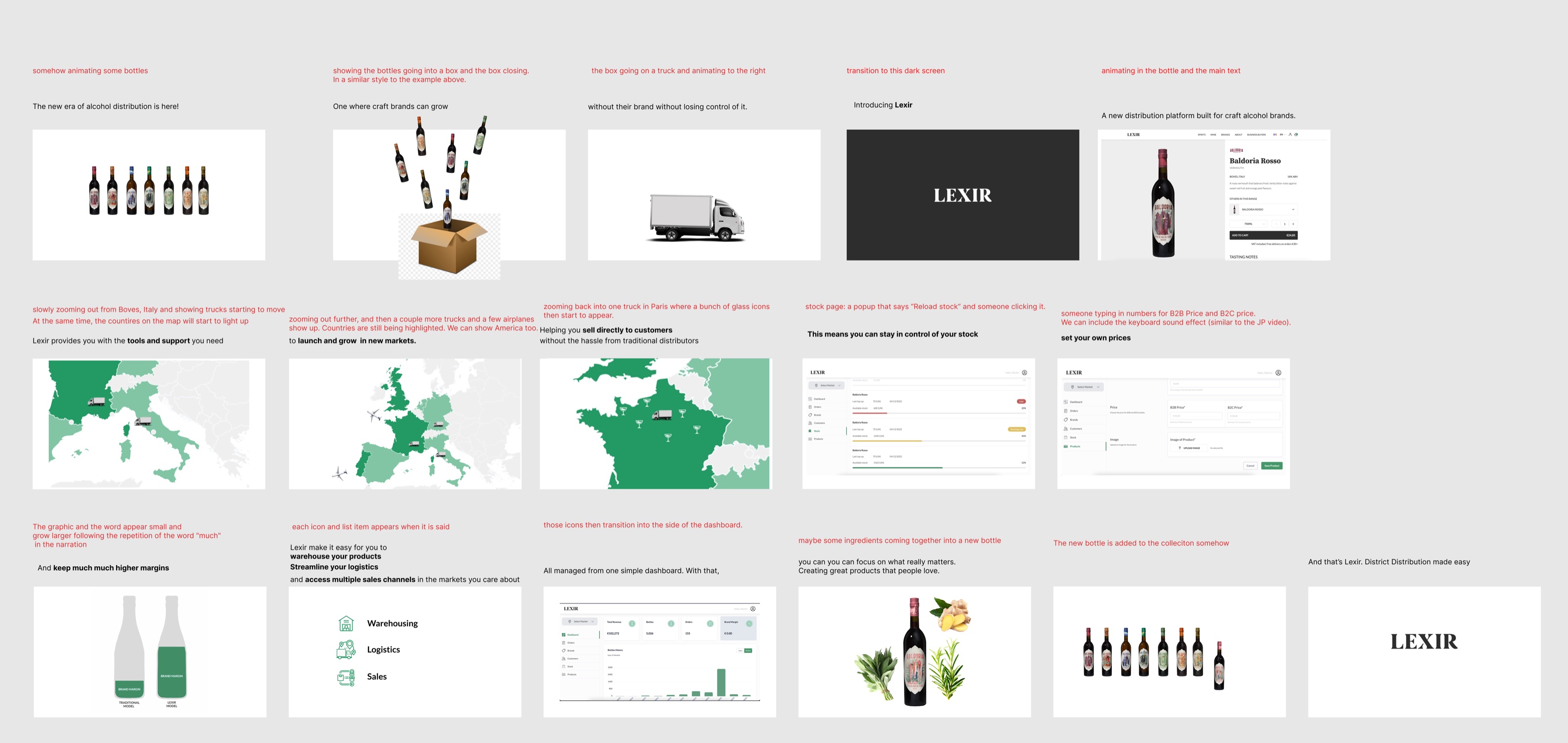
One of the most important pieces was the promo video at the top of this page. I wrote the script, recorded the voiceover, produced the music, and put together the storyboard. For a lot of prospects, it was their first real taste of what Lexir was, before they ever talked to us directly.
I also ran our Instagram account, which became one of our biggest channels for connecting to brands. I noticed sending a DM often felt more like an invitation rather than a chore the way a cold email did to a lot of brands, so I spent time shaping posts and outreach around what got people to engage.
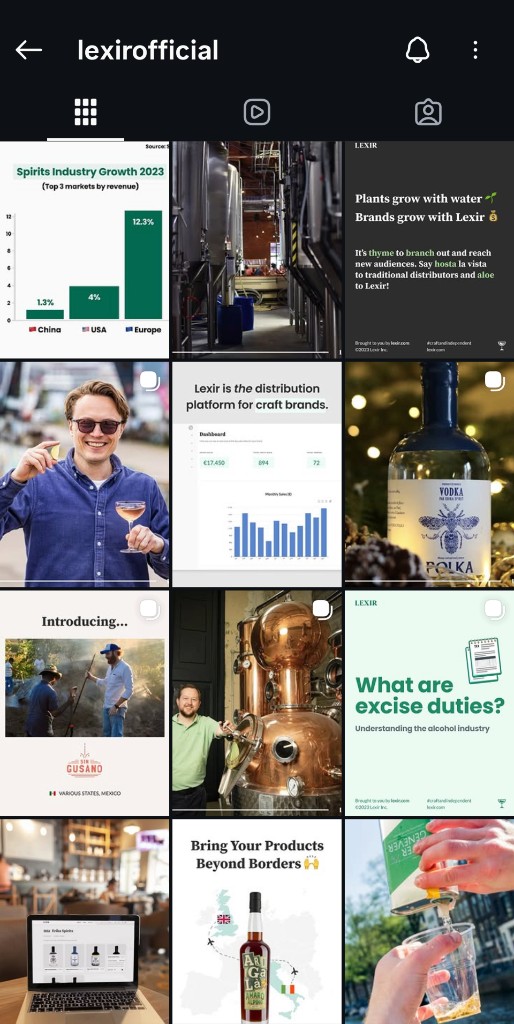
Bonhomie event clip — vertical content we posted; the print card I designed appears in it.
After signup: pricing, markets, and guides
While Lexir gave brands a lot more freedom than a traditional distributor, it meant they suddenly had to make calls a traditional distributor would usually make for them. Even when they were excited about the model, they still had a lot of questions about how to actually get started.
- “Which European market is the best one to get into?”
- “What prices should I set my products at?”
- “What bars or stores should I try to sell in?”
Those were fair questions, but they weren’t business decisions we could make for them. The better move was helping brands make more informed decisions themselves. It was clear to us that handing them a dashboard on its own wasn’t enough. We needed to give them guidance on the business side so they could enter a market with more confidence.
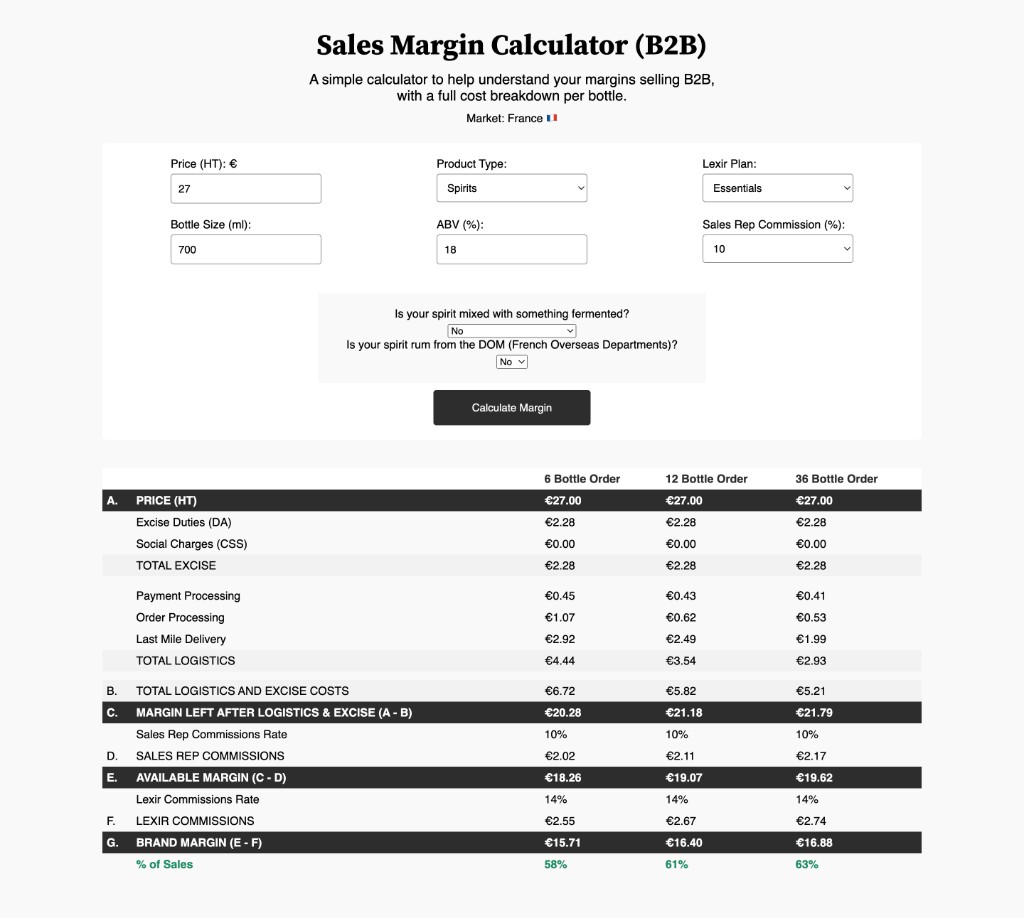
That’s why I pushed for materials and tools that helped brands self-guide, including market resources, a margin calculator that made the economics visible, and ways to connect with sales partners and local experts they could lean on in each market.
The margin calculator is one of the pieces I’m most proud of. I designed and coded it myself from scratch so a brand could enter price, market, and ABV and see what they’d earn per bottle, with tax, shipping, and Lexir’s cut included. Paired with the market guides, it cut down how much time we spent walking people through the economics by hand.
Lessons from building Lexir
1.A smaller, working product is better than a big, broken one
You can’t build the perfect platform in a vacuum and hope everyone immediately loves it. You need enough working product to prove people want it.
At Lexir, we had more success when we were able to ship, validate, and then invest in the full vision later.
2.Explaining the shift is part of the product
When you’re asking people to adopt a new way of working, new features alone won’t get you there. You have to keep earning buy-in for the model itself. Positioning and framing have to do as much work as the product.
At Lexir, that meant constantly showing why this wasn’t just another shop or distributor before anyone got on a call.
3.Retention needs as much attention as acquisition
Signing someone up doesn’t mean they're fully bought in, or that they know what to do next. After the sale, a new set of questions shows up, and if you only chase the next customer you lose the ones you already have.
At Lexir, a signed brand still needed guidance, economics tools, and people on the ground. Supporting existing customers mattered as much as getting new ones through the door.
4.Speak to one audience at a time
If you appeal to multiple audiences in the same place, people get confused about what you actually are. It’s better to split the story into clearer segments so each message is easy to take in.
We made that mistake on Instagram by mixing too many intents at once, and people often assumed Lexir was just another shop instead of infrastructure for brands to grow.